Celecoxib
Celebrex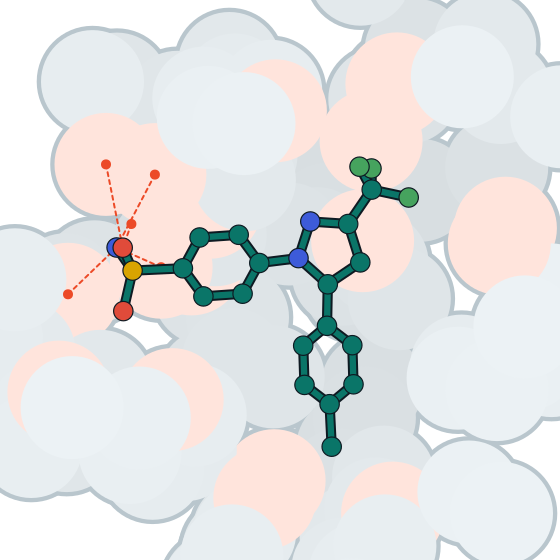
5 polar contacts with 5 residues, each within 3.5 Å
Residue numbers are as deposited in this structure (mouse sequence; conventional COX numbering is 14-15 higher).
Eases pain and inflammation by mainly blocking one enzyme, COX-2, while leaving the other closely related enzyme, COX-1, largely alone — so unlike ibuprofen, naproxen, or aspirin, it doesn't thin the blood, though it still carries the same FDA warning about heart and stomach risks.
How it works
Celecoxib blocks mainly one of the two related pain-and-inflammation enzymes in the body, called COX-2, while mostly leaving the other one, COX-1, alone. Ibuprofen, naproxen, and aspirin block both. Because celecoxib mostly spares COX-1 in blood platelets, it doesn't thin the blood the way those other drugs can — so it can't be used in place of aspirin for heart protection. But celecoxib still carries the same FDA warning as other NSAIDs about increased risk of heart attack, stroke, and stomach bleeding, and real-world trials haven't shown it to be clearly safer on those fronts, even though it produced fewer stomach ulcers in one study.
What it’s used for
Celebrex is approved to ease the pain, swelling, and stiffness of osteoarthritis and rheumatoid arthritis (including in children 2 and older), ankylosing spondylitis (a type of spinal arthritis), short-term acute pain, and menstrual cramps.
- Mechanism
- COX-2 selective inhibitor
- Drug class
- Small molecule
- Therapeutic area
- Analgesic / Anti-inflammatory
- Structure shown
- X-ray, 2010